


Thread Rolling Dies for Knurl Teeth Screws
GXP Click here
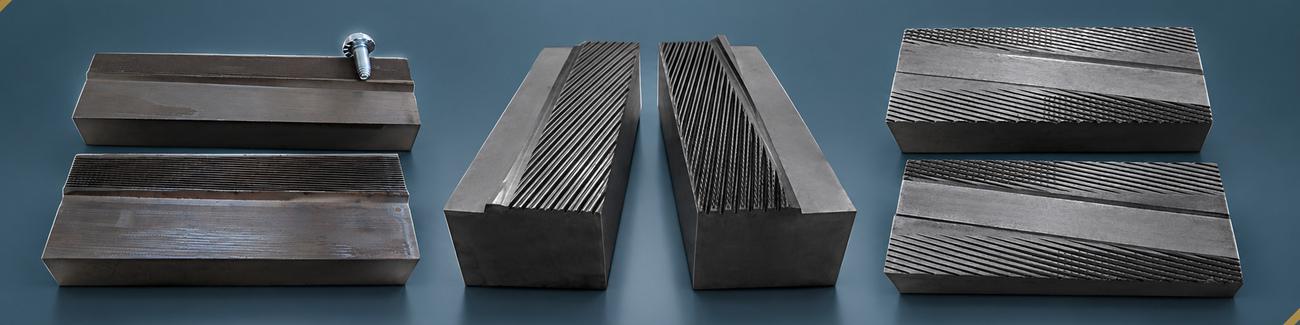
GXP supplies flat rolling dies for knurl teeth screw applications. Each matched set includes one stationary die and one moving die. Custom specifications can be reviewed according to detailed screw drawings and machine requirements.
Specify the required thread and knurled tooth geometry on the drawing to confirm the tooling configuration.
Definition and Functions
Thread rolling dies for knurl teeth screws are forming tools used to produce the specified thread and/or knurled tooth features on screw blanks. Form rolling uses pressure to displace material into the required surface profile.
Main functions:
- Form the specified knurled tooth pattern and dimensions.
- Form external threads where included in the tooling design.
- Control the location and length of the formed sections.
- Match die dimensions to the specified rolling machine.
Knurled teeth may provide grip or resistance to rotation, depending on the fastener design and mating material. The required function and acceptance criteria should be specified.
The website does not define the knurl pattern or confirm simultaneous thread and knurl forming. These details require drawing review.
Die Materials
The GXP product page lists the following material options.
| Material | Material Type |
|---|---|
| SKD-11 | Cold-work tool steel for carbon steel used |
| DC-53 | Cold-work tool steel for carbon steel used |
| SKH-9 | High-speed tool steel for stainless steel used |
| M2 | High-speed tool steel for stainless steel used |
Material selection should consider blank material, hardness, tooth geometry and production conditions. Confirm the exact grade, heat treatment and any surface treatment during quotation.
Ordering Information
Please provide these details for technical review and quotation:
| Item | Required Information |
|---|---|
| Screw dimensions | Major diameter, overall length, head style and head dimensions |
| Knurl specifications | Pattern, tooth pitch or count, tooth angle, depth and finished diameter |
| Knurl location | Position, formed length and distance from the head or other reference |
| Thread specifications | Thread size, pitch or TPI, tolerance and threaded length, if applicable |
| Blank specifications | Material grade, hardness, blank diameter and condition before rolling |
| Machine details | Machine manufacturer and model |
| Die dimensions | Length, height and thickness of both dies, including mounting details |
| Purchase requirements | Drawing revision, quantity in matched sets, inspection requirements and requested delivery date |
FAQ
1. What are these dies used for?
They form the specified knurled tooth features and, where included in the design, external threads on screw blanks.
2. What is the difference between knurling and threading?
Knurling produces a surface tooth pattern. Threading produces a helical profile for engagement with a mating part. Specify each feature separately on the drawing.
3. Can threads and knurled teeth be formed in one operation?
This depends on feature geometry, blank material and machine capability. Submit the complete screw drawing for feasibility review.
4. Which knurl patterns are available?
The product page does not specify patterns. Provide the required straight, diagonal, diamond or other tooth profile for review.
5. Which die materials are available?
GXP lists SKD-11, DC-53, SKH-9 and M2. The suitable grade depends on the forming requirements.
6. How do I confirm machine compatibility?
Provide the machine manufacturer, model and dimensions of both existing die plates, including mounting details.
7. What should be checked during trial production?
Inspect tooth pitch, depth, profile, finished diameter and knurl position. Check for double tracking, incomplete teeth and surface damage. Inspect thread dimensions separately where applicable.
Request a Quotation
Send GXP your screw drawing, knurl specifications, blank material and machine details for technical review and quotation.